If you are travelling along Østre Alle and Østerbrogade your eye may well be caught by some unusual white and yellow terrace houses. This unique little housing area is known as Brumleby and was one of the first social housing areas built in Copenhagen between 1852 and 1872 after the cholera epidemic.
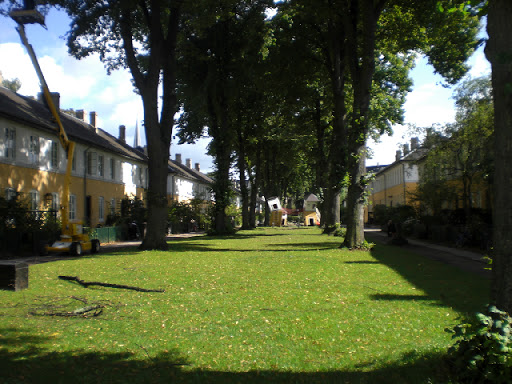
Workers were moved out of the city and the grim and unhealthy conditions in tenements there. The houses here were no bigger and had shared outside toilet facilities (which you can still see today although their use has changed since the homes now have their own private facilities) but were in a fresher environment. The houses are still social housing (with a waiting list) and there are less homes and they are now larger than in the early days.

It is a lovely area to wander round as long as you respect people’s privacy and gives the feel of a homely and friendly community. There are well tended little front gardens, children’s toys scattered around and hollyhocks galore in the summer. I love the little quirky play area (in the background of the first picture), which is made up of scaled replicas of the houses.
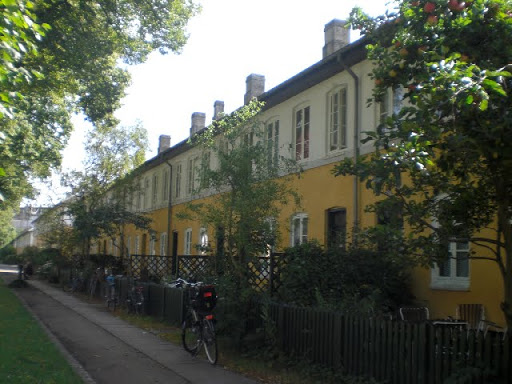
It is so unlike anywhere else in Copenhagen and I am delighted that it is now a protected area.

 Dejlige Days
[…] and sandpits. noted the street name, Olufsvej, and looked into it when we got home, hoping like Brumleby and Kartoffelrækkerne, there would be some history to it. As expected there was. The houses were […]
[…] around this gorgeous little spot in Østerbro. I have written about the history of Brumleby before here, but I love this tiny village community tucked just off the busy street of Østerbrogade. It was […]